
Could Your Studio Trace an Ink Batch Tomorrow?
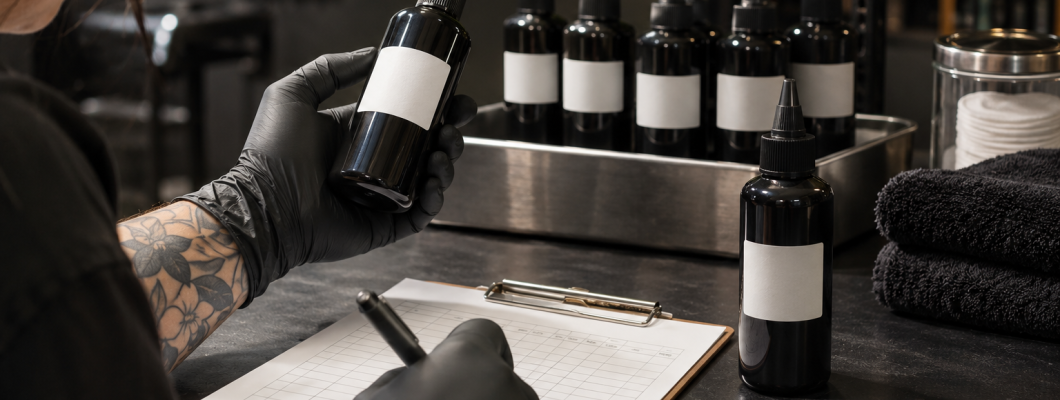
A professional studio should be able to work in both directions: from a session to the ink bottles used, and from an ink batch to the sessions in which it was used. An invoice proves a purchase. It does not, by itself, make that connection.
Imagine receiving a notice about one production lot of black ink. You recognise the brand. There are two open bottles on different workstations, another in storage and several empty bottles already discarded. Which sessions need checking? Without a usable record, you are left reconstructing events from memory.
This guide proposes a practical traceability workflow for professional studios. It is not a claim that any product linked below is affected by a recall, and it is not a South African legal-compliance checklist.
Traceability is not a sterility certificate
The U.S. FDA has documented microbial contamination in sealed tattoo-ink bottles. Its 24 October 2024 guidance announcement concerns manufacturers and distributors; it is not South African law. The practical lesson for a studio is narrower: intact packaging is important, but appearance alone cannot establish microbiological safety.
A traceability record does something different. It helps establish what was received, what was used and where to look when a concern arises. It does not prove that an ink caused a reaction, certify the product or replace sound infection-control practice.
South African context: separate requirements from this workflow
South Africa's National Environmental Health Norms and Standards, GN 7779 of 7 August 2026, section 6.4, address tattooing and body piercing. Sections 6.4.1(a) and 6.4.1(c)–(d) include using dyes and pigments according to manufacturer specifications and using single-use sterile individual containers for each patron. The bottle-to-session record system below is a recommended studio practice, not a prescribed form from that document. Confirm applicable local requirements with your environmental health practitioner.
Build the link: supplier → bottle → session
Use three connected records rather than one oversized spreadsheet:
- Receiving register: identifies the product, supplier, purchase and production lot.
- Bottle record: distinguishes individual containers, including two bottles of the same product and batch.
- Session record: identifies every bottle used for that appointment, including relevant mixing solutions.
A simple internal bottle ID such as INK-024 can connect these records. That ID is your studio reference, not a replacement for the manufacturer's lot number. Keep the original label readable and photograph it before handling makes it difficult to read.
1. Capture the evidence when stock arrives
Recording a delivery is easier while the bottle, packaging and invoice are together. Use the following as a suggested minimum, adapting it to the products and systems your studio actually uses:
- Supplier and purchase: supplier name, invoice or order reference, and date received.
- Exact product: manufacturer, product range, colour or variant, and bottle size. “Black ink” is not an adequate identifier.
- Manufacturer identifiers: lot or batch number exactly as printed, plus expiry or other date markings where provided. Preserve leading zeros and letters.
- Individual bottle ID: one internal identifier per container, with its storage or workstation location.
- Condition: whether the closure, seal, label and packaging are intact, and any damage or discrepancy noticed.
- Evidence: legible label photographs, invoice reference, and any product-specific documentation actually supplied.
- Decision: accepted into stock, held for clarification, returned or otherwise resolved; record who made the decision and when.
If a lot number cannot be found or read, record “not identifiable”, not a guessed number. Ask the supplier or manufacturer to clarify before accepting the bottle for use. A shipping date, barcode or shop SKU should not silently be substituted for a production lot.
A safety data sheet or generic brand certificate may help answer other questions, but it is not automatically evidence about the particular batch in your hand. Check which product, lot and claim any document actually covers.
2. Record use without losing the bottle identity
At session setup, link the bottle IDs to the session reference. If another bottle is brought into use later, update the record then. The aim is to record what was actually used, not only what was originally planned.
- Record the session reference, date, artist and bottle IDs.
- Include each ink contributing to a blend and any mixing solution used. “Greywash” alone can hide several source products.
- Record the opening date and any manufacturer-specific storage or after-opening instructions separately from the printed expiry date. Do not invent a universal period after opening.
- Retain the record when a bottle is emptied or discarded; closing a bottle record should not erase its session links.
Keep client identity and health information in the studio's appropriately protected client system. The stock register can use a session reference rather than repeating names, contact details or medical notes. Decide who can access and amend the records, retain a correction history, and test that a backup can be recovered.
A worked example: one product, two batches
Training example only. “Example Ink”, the lot numbers and session references below are fictional. They do not describe TattooINC stock or a real recall. This example demonstrates record linkage, not an approved mixture or recipe. Use only combinations and mixing products permitted by the relevant manufacturer instructions.
- INK-024: Example Ink / Lining Black / 120 ml / lot DEMO-A. Used in sessions SESSION-101 and SESSION-104.
- INK-025: the same product and size / lot DEMO-B. Used in sessions SESSION-102 and SESSION-104.
- MIX-006: Example Mixing Solution / lot DEMO-M. Used in SESSION-104.
A verified notice naming Lining Black, 120 ml, lot DEMO-A points to INK-024 and the records for SESSION-101 and SESSION-104. It does not automatically identify DEMO-B as affected. However, SESSION-104 used both bottles, so its record belongs in the review. If the notice instead concerns DEMO-M, the mixing-solution record provides another route to that session.
If the original session record says only “black”, you cannot confidently exclude either lot. Mark that uncertainty and widen the review with appropriate guidance. Do not turn an incomplete record into a reassuring conclusion.
3. When a recall or product concern arrives
TattooINC recall announcements: We will share recall announcements concerning products we supply through our official social-media channels and TattooINC newsletters. Follow us on Facebook, Instagram, TikTok, YouTube and X. To subscribe, visit the TattooINC website and use the “Join the Club” form in the footer.
Do not rely on a social-media feed alone. If you receive a manufacturer recall notice or suspect a product problem, stop using the affected product and contact TattooINC with the product name and batch details.
Check international recalls and safety alerts
Check official databases alongside manufacturers’ notices. Search by brand and product, then match the colour, batch or lot, date and affected market. A notice concerning one batch does not mean that every product from that manufacturer is affected. These links do not imply that TattooINC stock is affected.
- United States FDA recalls and safety alerts: search “tattoo” and the manufacturer or product name. Older notices may be archived.
- European Commission Safety Gate: search for “tattoo ink” and the brand.
- United Kingdom product safety alerts, reports and recalls: search for “tattoo ink” and check the type of notice.
- Health Canada recalls and safety alerts: search for “tattoo” or the product or brand.
If your bottle matches a notice, stop using it and contact TattooINC with the details for guidance. Confirm the affected market and identifiers with the original notice.
A published recall is not the only reason to act. A credible report of a possible adverse reaction also calls for identifying and placing the implicated ink and mixing products on precautionary hold while obtaining appropriate supplier and healthcare guidance. Preserve the product details and session record. A hold is a precaution, not a finding that the product caused the reaction.
- Verify the notice. Check the manufacturer, supplier or relevant authority's original communication. Save its date, reference and exact affected identifiers. A cropped social-media image may omit the lot or market scope.
- Stop use of stock that matches, or may match while identification is unresolved. Separate it from usable stock and clearly mark the hold. Check all workstations and storage locations, not just the main shelf.
- Preserve the evidence. Keep labels, photographs, invoices and the notice. Follow the notice or responsible authority's instructions for return, disposal or any requested samples; do not improvise a disposal method.
- Search both directions. Identify remaining containers and the sessions linked to the affected lots. Include empty-bottle records and relevant mixing products. Document gaps rather than silently excluding them.
- Escalate with facts. Give the supplier or manufacturer the exact product and lot, quantity and condition, purchase reference and your question. If a client reports a possible adverse reaction, encourage prompt assessment by a healthcare professional rather than attempting a diagnosis.
- Record the resolution. Log the response, actions taken, responsible person and date. Follow the applicable recall and professional advice on client communication and reporting. Do not resume use of held stock simply because no one has complained.
The FDA's tattoo-safety guidance specifically identifies brand, colour and lot or batch details for ink or diluent as useful information when investigating a reaction. That supports keeping precise identifiers; it does not establish which product caused an individual client's symptoms.
Use exact catalogue names, then verify the actual bottle
TattooINC lists Dynamic Ganga Black 240 ml (8 oz) and Dynamic BLKout Blackout Tattoo Ink as distinct products. A record should preserve that distinction rather than shortening both to “Dynamic Black”. The Dynamic 00 Mixing Solution 8 oz listing also illustrates why a traceability system needs to cover more than coloured ink.
These links identify catalogue products, not the batch delivered to a particular studio. Read the actual container and supplied documents. A catalogue description cannot tell you the lot number of the bottle on your workstation. No current availability or safety certification is implied by inclusion here.
Test your system before you need it
Select one bottle and try a short desk-based drill:
- Can another authorised team member find its invoice, exact product name and lot without asking the person who bought it?
- Can they locate the other containers from that lot?
- Can they find the sessions in which it was used, including a session where two bottles were used?
- Can they trace one of those sessions back to every recorded ink and mixing product?
- Can they distinguish confirmed matches from missing or ambiguous information?
Record the gaps and fix the process. The useful outcome is not a perfect-looking form. It is a defensible answer to a specific question, supported by records someone else can follow.
Frequently asked questions
Is the invoice enough?
Not on its own. It links a purchase to a supplier, but may not identify the production lot or show which bottle was used in a session. Keep those links together.
Is a batch number the same as an expiry date?
No. Record the identifiers as labelled and retain both where present. If the marking is ambiguous, seek clarification rather than interpreting it from memory.
Does a complete record prove an ink is safe?
No. Traceability supports investigation and response. It does not establish sterility, eliminate risk or determine the cause of a reaction.
How long should a studio retain these records?
This article does not prescribe a retention period. Set one using the requirements and professional advice applicable to your studio, including privacy, insurance and client-record considerations. Keep the traceability and client-record policies consistent.
Professional takeaway: Know what the bottle is, preserve where it came from and record where it was used. That is the difference between owning an invoice and having a traceable studio workflow.
Explore TattooINC’s ink categories
Browse the full tattoo ink category or select a manufacturer or ink type below. Category listings do not confirm the availability of a particular batch.